Kaguya
About the Artwork
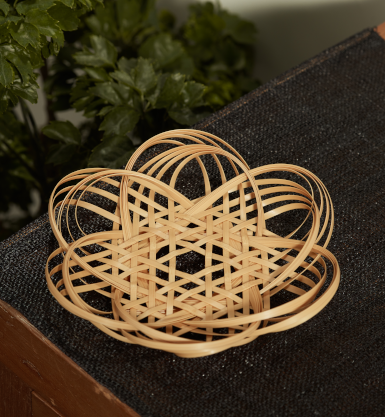
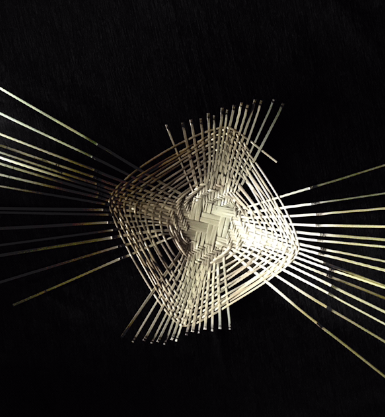
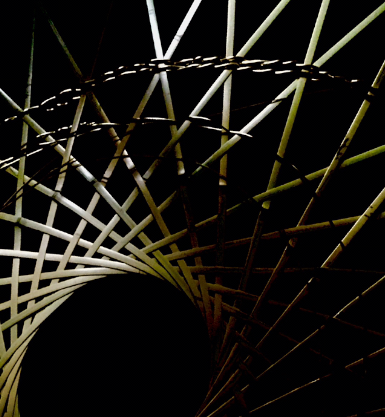
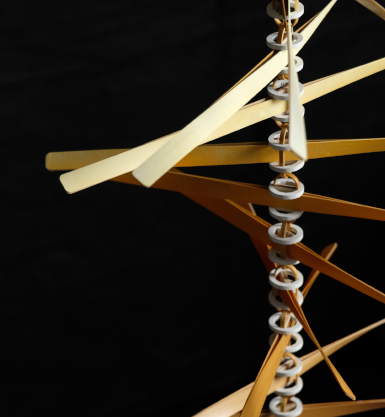
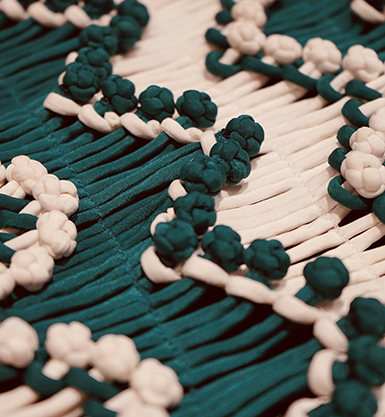
Constructed in the form of a scroll painting, the work illustrates a night scene in the bamboo forest, narrating the story of Princess Kaguya. This Japanese folk story centres around the journey of a mysterious girl, Kaguya, first discovered inside a bamboo stalk then raised by a bamboo artisan, and explores the intricate connection between human beings and nature. The irregular Takesaiku weaving patterns, intertwining and intersecting each other, create a juxtaposition of "Yin” and “Yang", achieving the perfect balance in composition. The use of bamboo crafting & papier-mâché, which makes up the figurative elements such as the dark clouds, enhances its allure through visual storytelling.
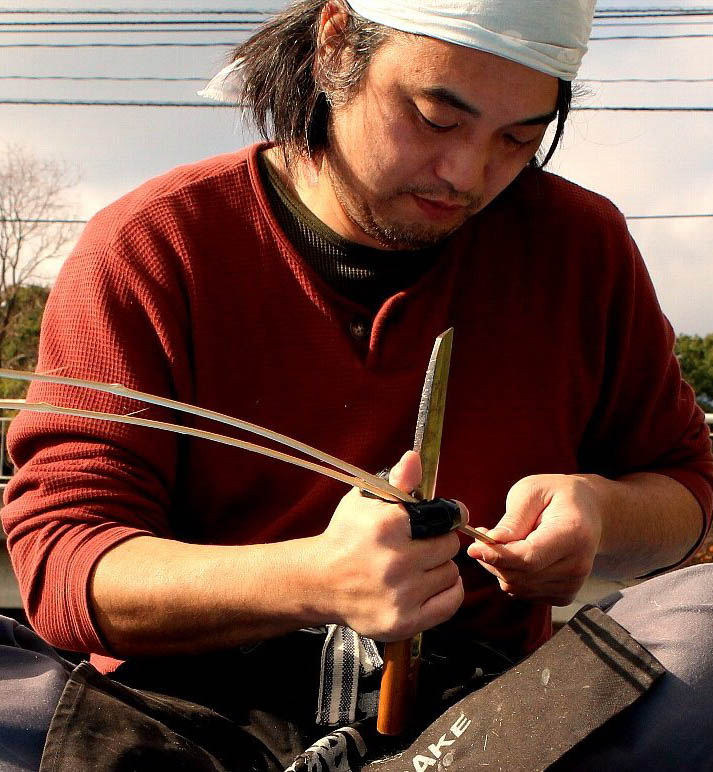
Hailing from distinctive cultural backgrounds, the practices of Tamotsu Nishimoto and Mimmy Tjia showcase compelling variations in bamboo craft. Nishimoto-san mainly uses Madake, a species abundant in Japan. renowned for its long and flexible internodes. Whilst he typically works with Madake that has had its oil and moisture removed, he personally sources fresh, green bamboo from the forest for delicate pieces such as chopsticks. Conversely, the bamboo stems procured by Mimmy in Hong Kong are distinctly more slender than Madake and are customarily worked with their oil and moisture fully intact.
This rich material contrast formed the foundation of a riveting reciprocal exchange established through our “Crafts Fellowship Programme”, with each artisan undertaking a residency in the other’s city.
Story of Traditional Craft
Bamboo has long transcended mere utility, emerging frequently across traditional Asian poetry, painting and folklore as a moral and cultural symbol. While many regional parables and motifs exhibit distinct variations, its hollow stem, firm roots and upright stance embody the spirit of upward mobility, the values of purity and integrity in Chinese culture. Its practical and upstanding depiction further lends to its ubiquity in household wares and decorative installations, often serving as a subtle reflection of the owner's honest character. Historically, the material’s significance is quantifiable: more than 60 categories of bamboo household objects were documented during the Han Period, which expanded to 250 categories by the Ming Dynasty.
Takesaiku
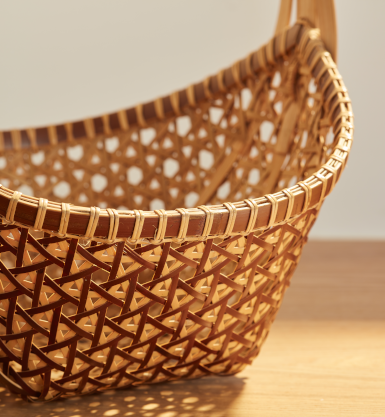
The art of Takesaiku (bamboo weaving) in Beppu boasts a prestigious lineage, as chronicled in the Nihon Shoki (Chronicles of Japan). Its genesis dates back to the Nara period, when Emperor Keikō’s personal chef first recognised the local Madake bamboo as the perfect material for crafting robust baskets. Initially serving the utilitarian needs of farmers and fishermen transporting their wares, the craft was sustained by Ōita Prefecture’s abundant groves, which supplied smooth, fast-growing culms ideal for weaving. By the Edo period, the dual drivers of Beppu's burgeoning hot spring tourism and a construction boom elevated demand for high-quality bamboo items, including vases, writing furniture and baskets for the Tokonoma (decorative guest alcove). This burgeoning market necessitated the establishment of a large technical school featuring dedicated bamboo departments.
Bamboo Crafting & Papier-mâché
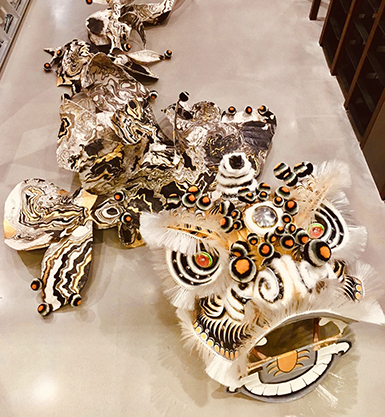
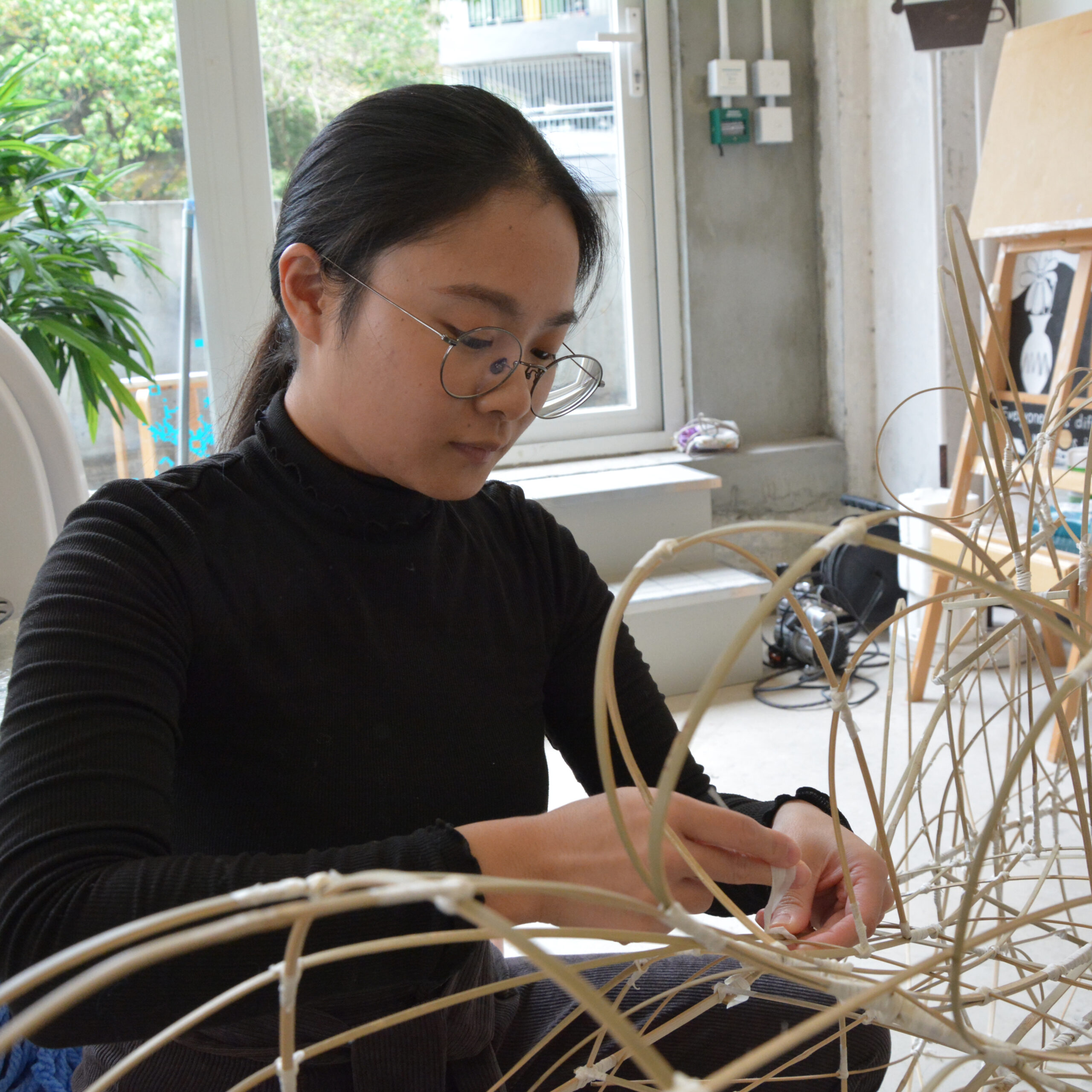
The processes involved in traditional bamboo crafting and papier-mâché technique can be broadly classified into “binding, paper-mounting, painting, assembling”. The skeleton of the model is first created by binding bamboo strips with paper wraps. Next, tissue paper or satin is applied onto the skeleton. After the model is made, colour will be painted onto the model and patterns will be added. Decorations such as felt balls and tassels are assembled to complete the model. Styling, precise proportions, colour schemes, as well as sharp and delicate paint work are all critical in the craft making process.
Making Process
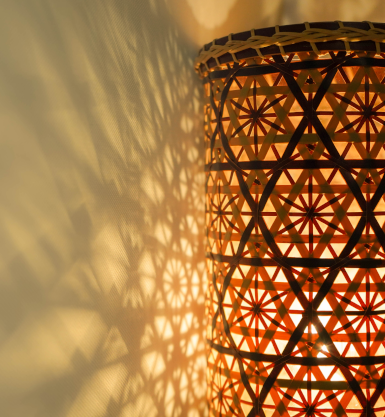
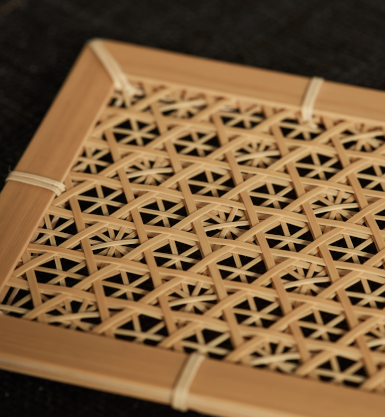
Nishimoto-san creates the basic structure of the bamboo sculptural painting and embellishes it with different Takesaiku patterns, including rope-like weaving, hexagonal weaving, octagonal weaving, clematis weaving, circle weaving etc. After that, Mimmy applies tissue paper onto the bamboo structure to sharpen the narrative with her paper-mounting technique. Then, dark colours resembling the night sky are painted onto the model and patterns of clouds are added. These intersecting and overlapping patterns construct a sense of spatial depth and engage in a visual dialogue.
Artworks from same series
OTHER WORKS FROM EXHIBITION

Auspicious Horizons
Yue Kee Rattan Factory & Ahung Masikadd & Barnard Chan & Cecilia Lai